
2025 was a year when I set out to spread the word as far as I could about the impacts of tech in general, and of AI in particular. And I learned a lot more than I preached!
Learnings
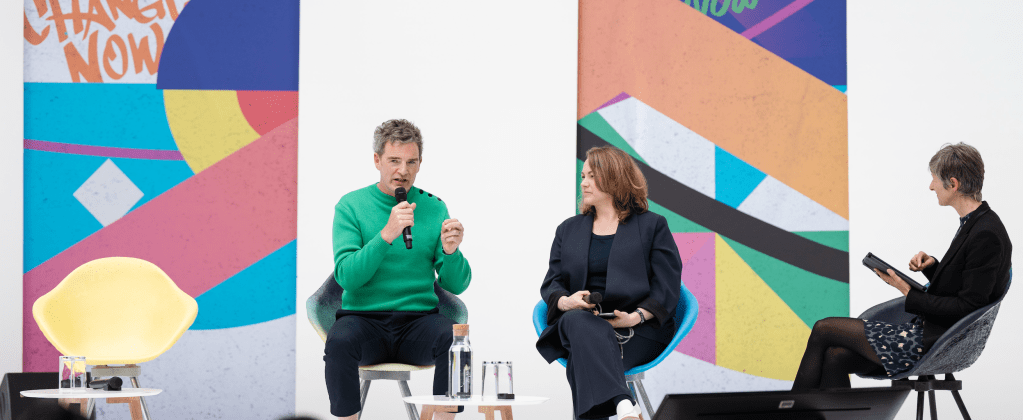
One of the main highlights: speaking at ChangeNOW, one of the world’s biggest climate conference, about the impacts of AI. What I learned:
- Even big tech consulting companies like Sopra Steria (represented by Axelle Lemaire, their head of CSR & former French tech minister) have serious doubts about generative AI’s benefits vs. its impacts, and advise their clients accordingly
- Climate audiences seem largely unaware of the extent of AI’s impacts. Since then, those impacts have soared, to the point where local communities are blocking data centre construction projects. So, fingers crossed for a deeper dive at the next edition of ChangeNOW.
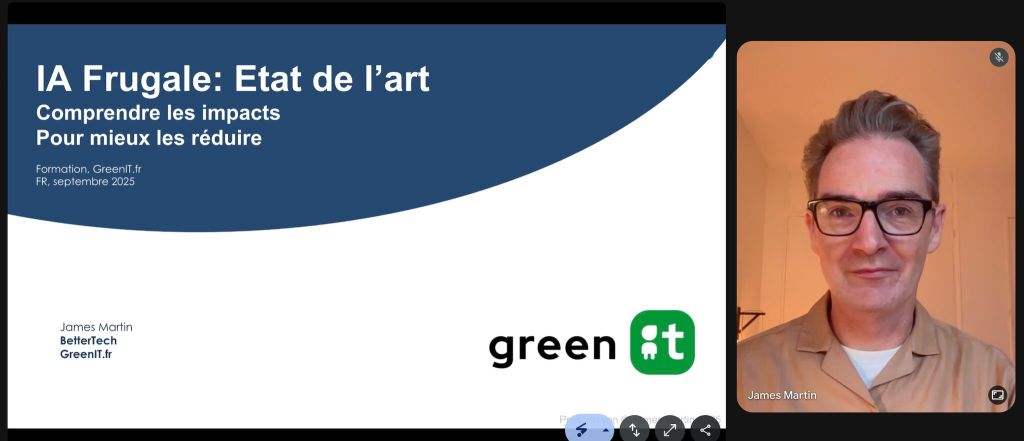
Perhaps my proudest achievement: launching the “Frugal AI” training course, with French responsible tech pioneers GreenIT.fr, in September. It’s still early days, but I’ve already learned a lot:
- Many tech execs, from strategists to heads of AI, are also unaware of the full extent of generative AI’s environmental and social impacts; all agree that more caution and better governance are required
- Teaching is a learning experience. Trainees’ feedbacks – especially the “room for improvement” ones – are crucial for fine-tuning the course as you go on. And not just trainees’: prospective interest in variations of such courses can often give great ideas for future evolutions (watch this space on that front!)
Next up, and equally important for whatever’s next: establishing the first ever Responsible AI Charter for French Tech 120 startup Shippeo (200 staff). A unique in-house experience that taught me:
- Responsible initiatives can come from anywhere in a company as long as top management’s minds are open enough… and they see their interest in it
- Green initiatives can and should piggyback on others: in this case, preserving privacy and stopping shadow AI was the n°1 motivation for imposing one official LLM. Once that was done, staff were given tips on how to use them frugally too 💡
- Charters aren’t enough. Even huge companies like Groupe La Poste (220k staff) have them, but for their teams to know about them and live by them, training is essential.

I also got to speak to many more non-tech or broader audiences, be it at Groupe La Poste’s Data & AI Forum (above), music conference MaMa or to the members of the UK’s Association for Science and Discovery Centres, a network of over 50 science centres and museums. What I learned:
- Regardless of (currently changing) legislation, those companies who proactively seek to minimise their impacts on society and the planet will win in the long term. Even Volkswagen, hardly the historically greenest of car manufacturers, recently reasserted that electric is the future, at least for smaller cars, despite the EU’s backtracking on the topic
- The general public, including children, needs to hear a different narrative on the impacts of AI from that offered by big tech; and that narrative needs to be critical.
Also not forgetting a bucket list wish granted mid-year, when I got to talk to the incredible Sasha Luccioni (Hugging Face) and Kate Kallot (Amini) in the opening session of Viva Tech 2025’s sustainability summit – more on that here…
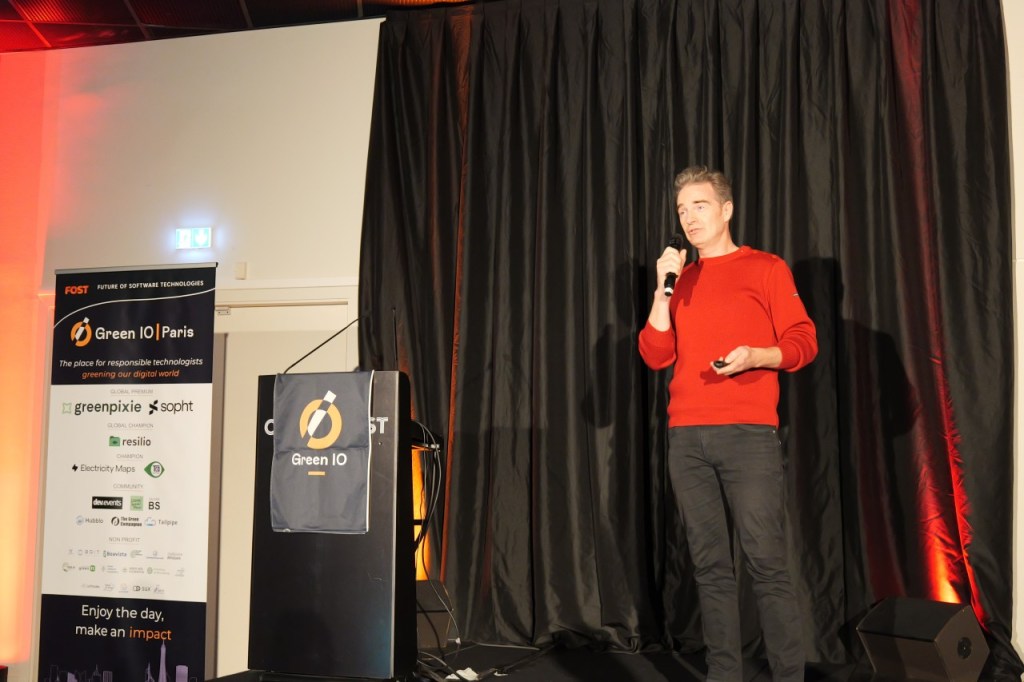
Closing off 2025, talking at Green IO in December taught me about the importance of humour, or at least a little distance, when tackling such grave issues. Attempting to share tips on imposing frugal AI in your organisation, I got two audience questions asking whether I’m an “AI vegan“! A simplification of my position, but it’s both funny and thought-provoking. As was the debate by Sasha, Boris Gamazaychikov and Théo Alves da Costa, when these sustainable AI pioneers sometimes had to defend non-green arguments, hilariously underlining the ridiculousness of some techno-solutionist ideas, like data centres in space.
Hopes
Whence my hopes for 2026:
- That most organisations will realise they’ve jumped on the LLM train a little too quickly over the past three years. Today, US companies know a majority of their staff are using shadow AI, but 59% have no official policy to stop them doing so (re. KMPG). They will as such look to make their AI usage considerably more responsible moving forwards, to avoid major risks related to generative AI’s unreliability/opacity (no two answers to the same question are ever the same); massive resource consumption; and countless security loopholes… to name just three risks
- The most responsible companies will continue to blaze their own responsible trails despite legislative headwinds (EU omnibuses watering down the AI Act and CSRD + all things Trump), as they know it’s in their and everyone’s interest to have a viable society and planet in the next 10-20-30 years. No planet, no business…
- AI’s financial unsustainability will be laid bare – I think I’ve already made the point that “big” generative AI is not ecologically sustainable. In 2026, the financial cracks will start to show too. AI will have to make $2 trillion in revenue to break even by 2030, according to Bain and Company; but it’s ‘only’ on track to make $800bn. What about the other $1.2bn? Mine and others’ bets are on the bubble bursting around the middle of 2026. What happens then? Chances are more frugal models will become the norm, as both financial and energetic resources start to dry up. Fingers crossed…
Inspirations
It wasn’t all work, work work! Here’s where my inspiration (also) came from in 2025:
- Books:
- Empire of AI, by Karen Hao, was a massive eye-opener, not just for the way it exposes OpenAI’s deep-rooted skullduggery, but how it opens up to broader social and environmental impacts – e.g. the global south workers exploited to ensure our AI outputs aren’t too shocking – but also how it manages to end on a hopeful note
- Careless People, by Sarah Wynne-Williams, which confirms Meta’s deep-rooted skullduggery to a degree that we hadn’t previously fathomed (TL;DR: they just don’t care)
- Podcasts:
- Environment Variables – not just because I was on it! The Green Software Foundation’s podcast is a go-to for the latest on green IT. Host Chris Adams will be sorely missed!
- Your Undivided Attention – The Center for Humane Tech was one of the first orgs to get me into responsible tech around 2017-18. Their podcast, now focused on the social and political ravages of unchecked genAI, remains as acutely relevant today
- Tech Won’t Save Us – Canadian journalist Paris Marx’ relentless pursuit of Big Tech hypocrisy also remains as essential today as at its debuts, over 300 episodes ago
- Trench Tech (FR) – a lively take on the more responsible aspects of tech, its guests this year included Sasha Luccioni and Lou Welgryn, who co-leads the excellent org Data for Good
- Chaleur Humaine (FR) – Le Monde’s environment-focused podcast is great at making sense of the global big issues. Let’s hope it focuses more on tech moving forwards…
- Series & Films:
- The Last of Us season 2 was another masterpiece in gripping storytelling that is as moving as it is action-packed. It even got me back into gaming after a long hiatus, as I just had to play “Part 2”! Mind-blowing
- Severance season 2 – once again bringing new meaning to the notion of selling one’s soul to one’s work (read “corporate devils”)
- Bugonia – also a great criticism of work, but above all of the loneliness epidemic, conspiracy theories and so much more… the more you think about it, the more genius you realise it is.
- Music:
- Parcels: LOVED – Endless waves of funk-pop sunshine in this, the finest of the Australian band’s three albums. And live (i.e. fully live, with no digital trickery or recordings) they are truly astounding
- Weval: Chorophobia – OK, the whole album wasn’t perfect. But the minimal breakbeat techno of “Dopamine” was literally the drug that kept me going all year
- Polo and Pan: 22:22 – this French dance duo sometimes flirts too closely to cheese, but got it just right for this latest collection of tropical house. *Almost* as good as the incredible “Caravelle” (2017)
- Blood Orange: Essex Honey – Devonte Hynes strikes back in this warm, enveloping ode to growing up in England. This year’s musical comfort blanket.
Here’s to 2026, hurrah! 🥳

 BetterTech