This summer I decided to binge both HBO’s biting satire “Silicon Valley” and all seven books of “The Hitchhiker’s Guide to the Galaxy.” Why? Because the latter is frequently cited, notably by tech billionaires, as a work of inspirational genius, whereas the latter? Less so.
My two cents were confirmed by my summer rediscoveries of both: H2G2 is packed with concepts that tech leaders love to cite, to affirm their ‘coolness’; but it is an absurd British comedy that was made to be funny, not to be their bible. Whereas Silicon Valley was made to roast same tech leaders, and it does so viciously effectively. So let’s start with it.
Silicon Valley: Parody so real it hurts
When Silicon Valley first came out in 2014 – yes, it’s 10 years old – I asked Roxanne Varza, head of Station F and leading light of the French tech scene, what she thought of it. She essentially said it was so accurate that it made for quite painful viewing. I thought that was a pretty good definition of parody, and what its effect should be (imagine politicians watching The Thick of It, or Veep…) Because above all, she was right. Mike Judge and his co-creators put an inordinate amount of time into researching their series, taking on expert consultants such as ex-Twitter CEO Dick Costolo to make sure they got the details right. And the examples are countless.
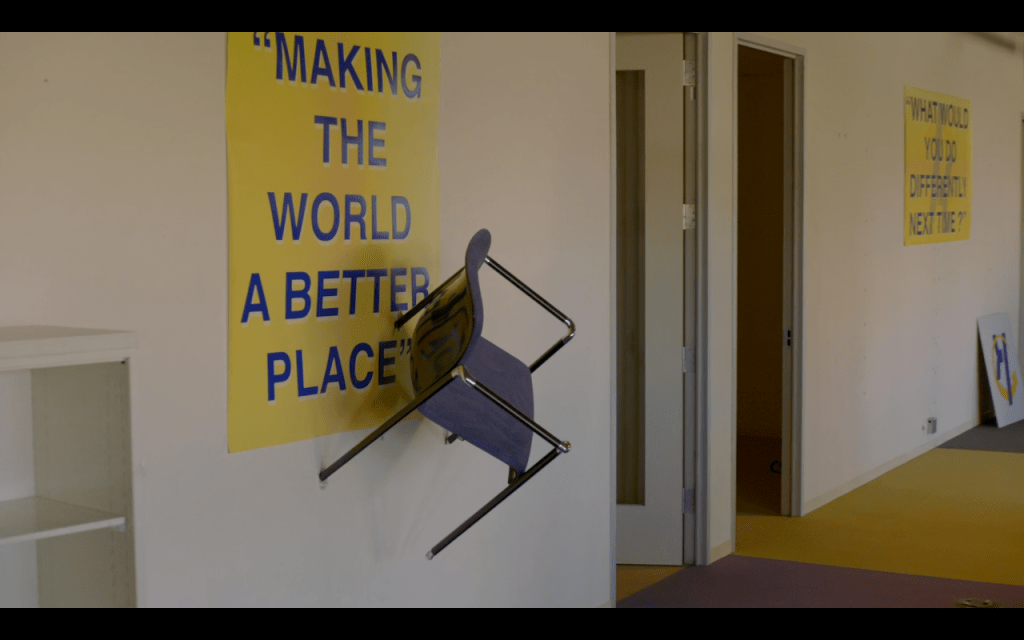
Making the world a better place, the key leitmotiv of the series, was it best running gag. Naturally, because behind all of Silicon Valley’s good intentions, its companies’ main aim is making money; a pursuit which often makes the world worse. This runs from season’s one excellent TechCrunch Disrupt pitches, where startup after startup claims to be “making the world a better place through end-to-end encryption or whatever“, to the final season, where Gavin Belson, the series’ arch-villian, gets kicked out of Hooli (the Google-like mega-company he co-founded). He bounces back to found “Tethics”, an NGO for ethical tech, which leads to this outstanding joke, where Pied Piper CEO Richard Hendricks is told by one of his VPs that she’s getting “heat from her friends at Facebook for working for an untethical company”:
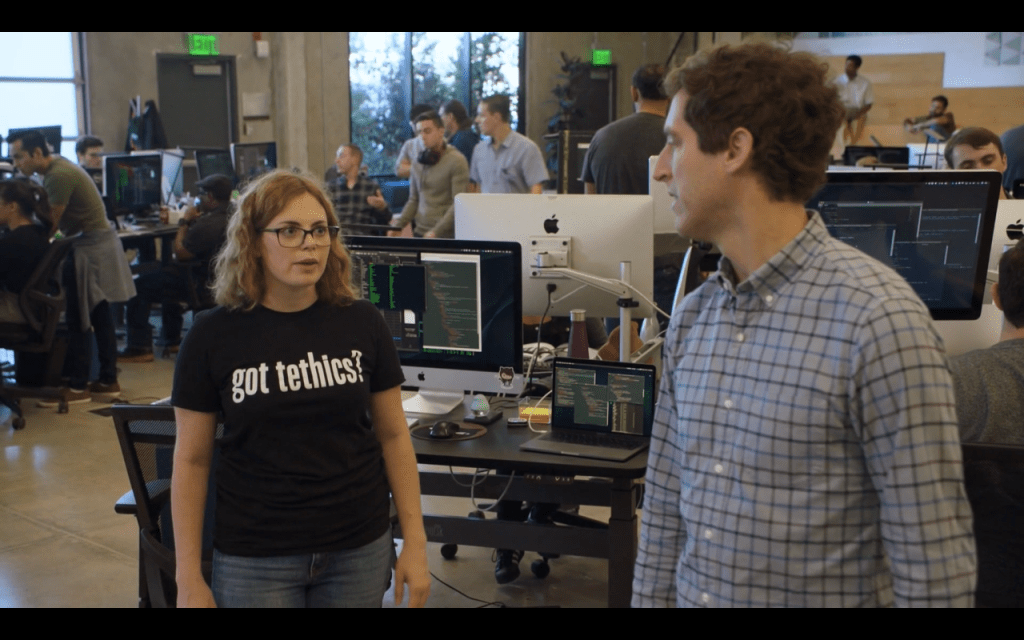
As a reminder, this was written around the time Facebook’s reputation was at its lowest, post-Cambridge Analytica (when it emerged Facebook had been used by an unscrupulous company to influence election results). As such, the series totally derides the very notion of “responsible tech”; especially when it turns out that Belson’s NGO is a total sham, its prospectus and mission statement compiled by copying the ESG statements of companies like Starbucks.
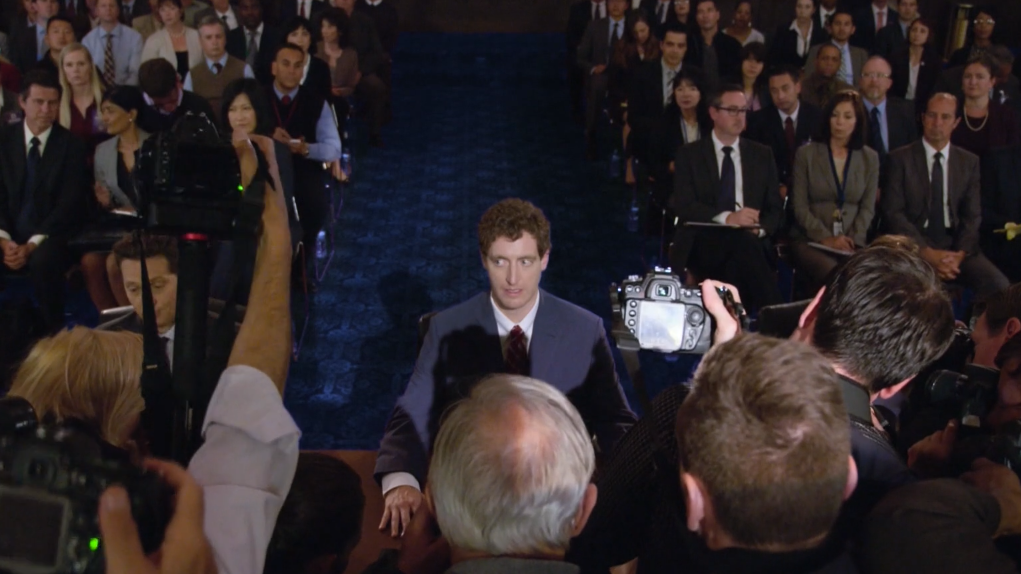
Speaking of Facebook, the above moment, also towards the end of the series’ run, was shot specifically to mimic the moment Mark Zuckerberg was hauled up in front of the US Senate to answer for Cambridge Analytica-type misdemeanours.
Some of SV’s other satire is more subtle, for example its recognition of neurodiversity in tech leaders (to put it nicely). Hendricks is called out from season one for having “Assburgers” (as another character misnames this type of autism), and later meets the head of another company who can hardly string two sentences together, and yet runs a billion-dollar startup:
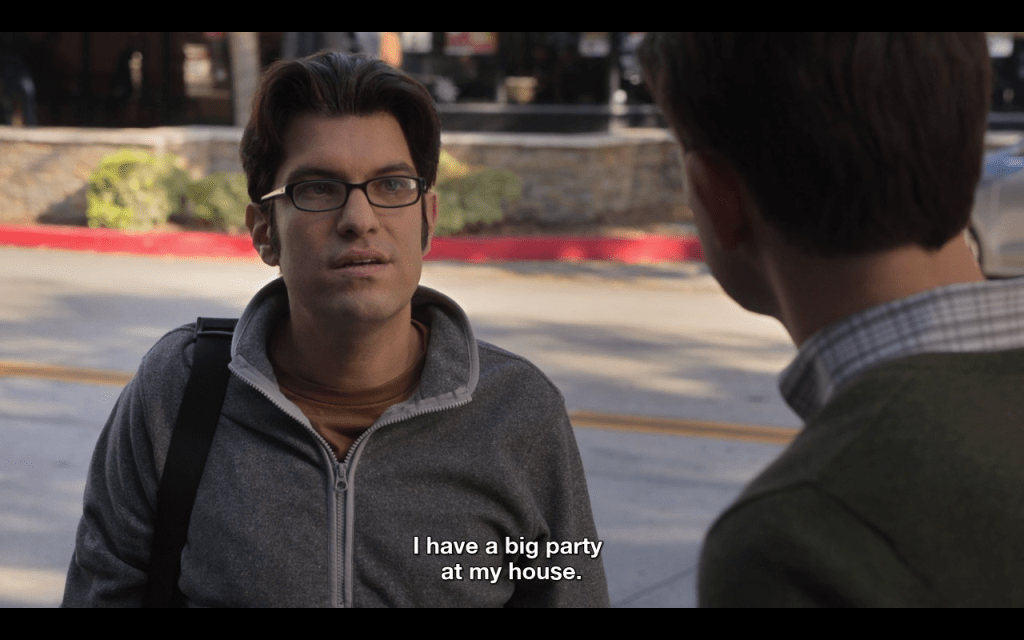
Needless to say, Dana (for that is his name) does not know how to function socially at said party. Much like Richard himself, who frequently vomits – sometimes in plain sight – when he has to give his staff a rousing speech.
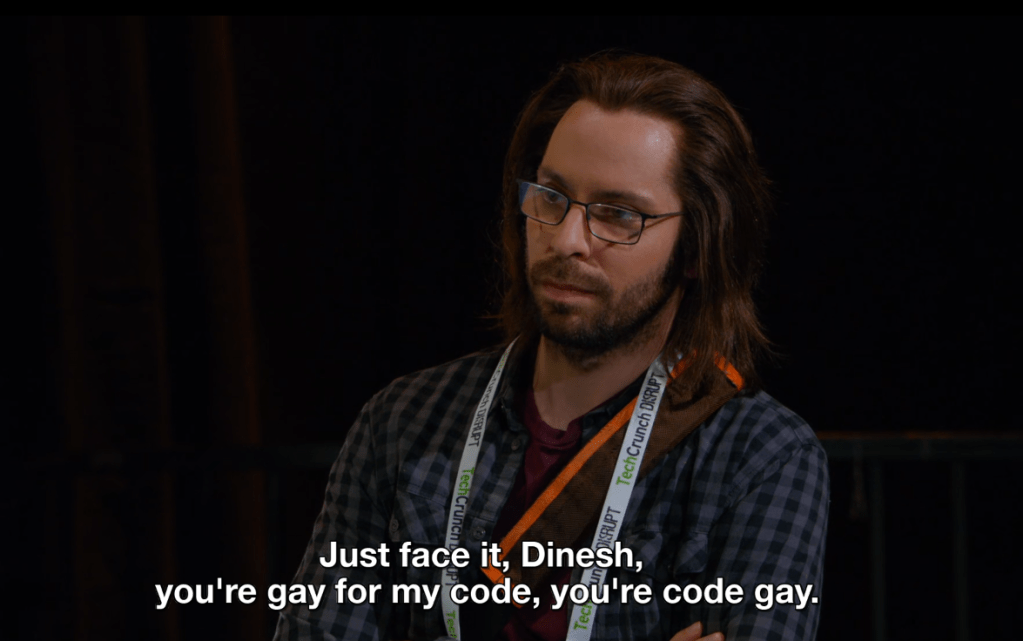
Asocial developers is indeed another of SV’s running gags, and this also comes across in its brilliantly childish jokes. The constant, petty rivalry between Dinesh and Gilfolye (above), Richard’s right-hand tech men, is a great example of this. As is the spectacularly failed attempt of Hendricks’ flunky, Jared, to get in on said jokes:
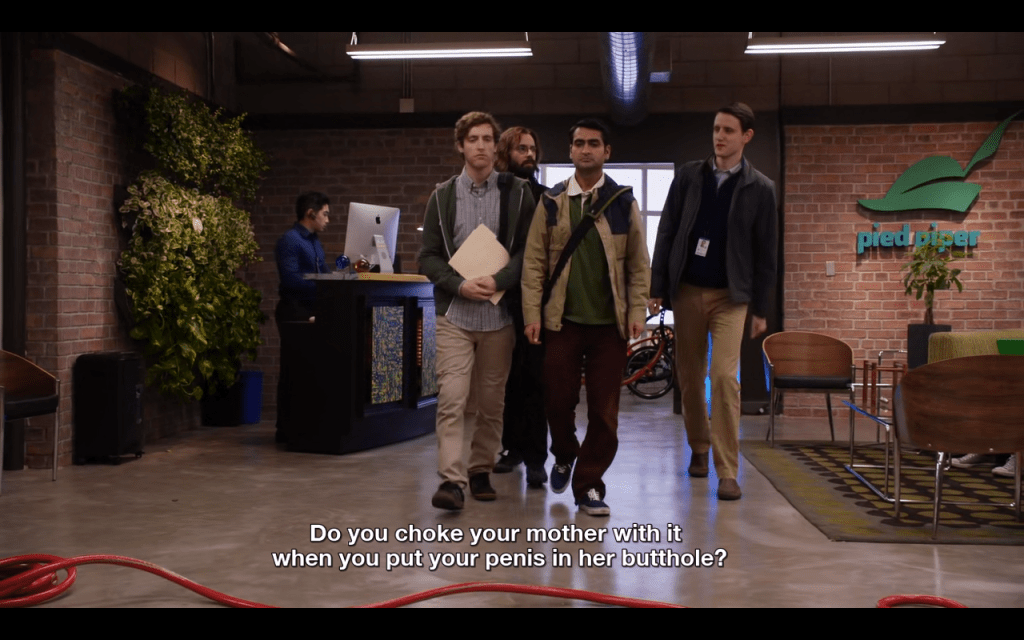
The above wisecrack, which refers to Dinesh’s new gold chain, is so unexpected that it makes Richard trip over the red hose and divulge his plans to dethrone his company’s current CEO. Or when developers’ childish humour and lack of social skills directly causes their failure.
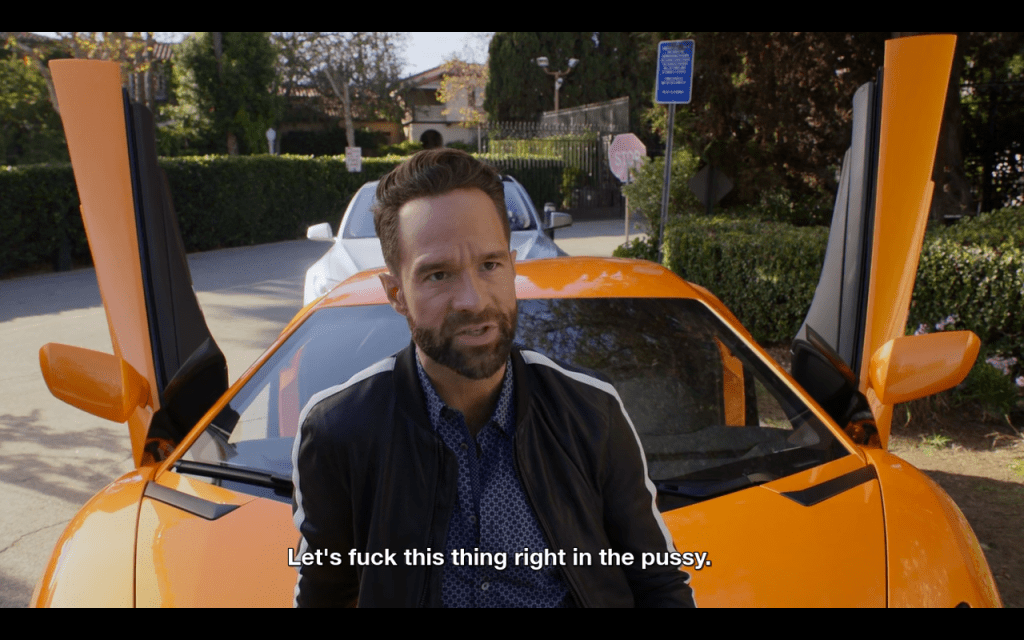
Developers aren’t the only sources of below-the-belt jokes, however: recurring character Russ Hanneman is an investor with no filters – possibly inspired by Mark Cuban – who comes to Pied Piper’s rescue on numerous occasions, but whose brash billionaire style couldn’t be more mismatched with that of our favourite asocial coders. He still manages to knock the nail on the head concerning Jared, who turns out to be a ladies’ man against all expectations:
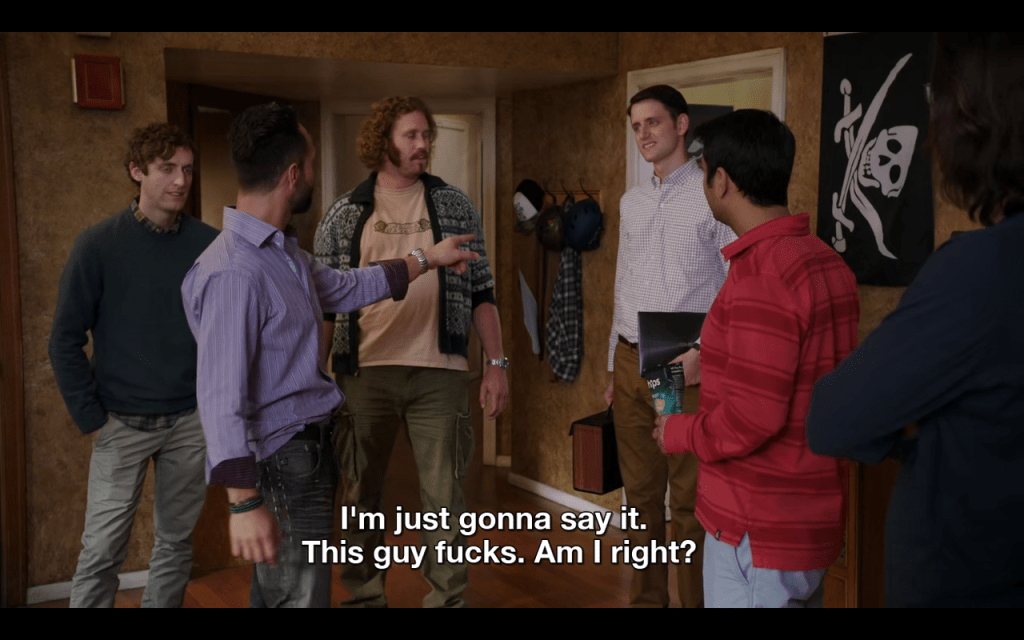
He also triggers one of SV’s many moments where the series expertly predicts – and savages – future tech trends. The “let’s f**k this right in the p*ssy” comment comes when Richard shares his dream of a decentralised internet, which depends on users’ smartphones to run the network, instead of on centralised datacenters:

This key idea behind the next iteration of Pied Piper may (or may not) have been inspired by IPFS, or InterPlanetary File System, which was invented just 2-3 years before the above episode came out. It’s a decentralised protocol whereby each piece of content has its own address, rather than the domain where you’d find it. This essentially means said content can exist anywhere – usually on its user’s phone – and be accessed by anyone who has its address. Though IPFS has yet to take off – and maybe it never will – it’s a perfect fit with Richard’s ongoing crusade to fight big tech dominance: a cause many fellow geeks can fully identify with.
More prosaically, SV also lambasts VCs’ obsessions with trends that have since died out, notably VR. Here, chief bullshit officer Erlich Bachman tells Bighead how VCs will “hurl bricks of money at VR…”
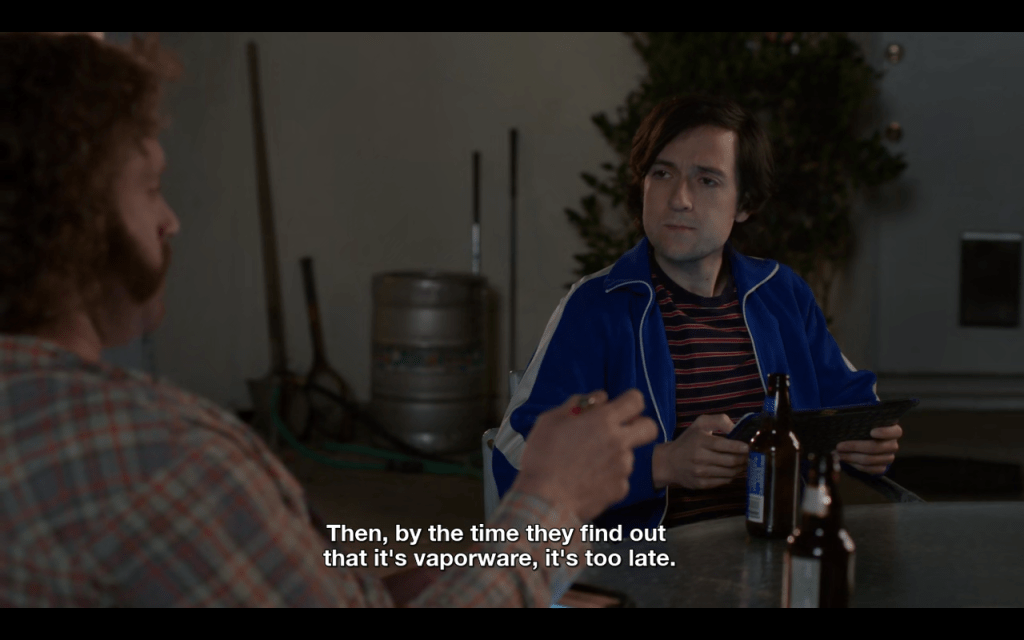
Said lambasting comes later on when a VR wunderkid – clearly inspired by Palmer Luckey – ruins Hooli’s big VR launch when his immersive tech makes the demo’s audience’s headsets explode. This happens in a scene reminiscent of another major Zuckerberg moment where he decked out the entire audience of a conference in his own VR headsets. Headsets provided by Palmer Luckey’s Oculus Rift, the company Facebook acquired for €2bn in 2014… before notoriously shutting its metaverse division last year after losing over €20bn on it. Maybe Zuckerberg should’ve listened to Judge & co…
Another great poke at tech ridiculousness – and VCs’ readiness to “hurl bricks of money” at whatever the next big thing is: the Bro app. Invented by Dinesh’s cousin, it’s a messaging app that allows you to send just one word to your contacts: “Bro”. A direct jab at “Yo”, an app that really existed a while back and did exactly the same thing, the SV team even made a working version of the app, and geek fans made their own Bro app on Android (but it no longer exists, alas).
But the biggest joke is that whilst Dinesh struggles to reclaim the 5 grand he initially invests in his cousin’s venture (Pied Piper needs it), said cousin ends up cashing out when it’s acquired a few seasons later for several hundreds of millions… and Dinesh is the one asking his cousin for money! Tl;dr: in Silicon Valley, any shit will sell.

Above: would you buy anything off Erlich Bachmann?
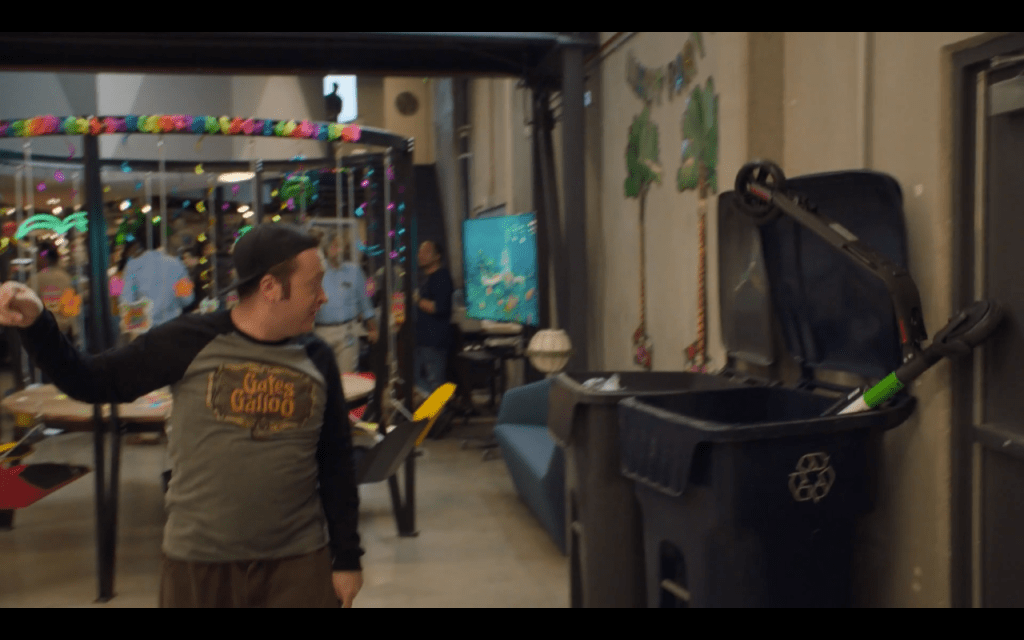
Amongst other trends skewered by SV: electric scooters, now a mainstay of tech workers everywhere. Designed as a green type of transport, they inevitably end up in the trash (cf. above, from the show’s last season) and are a general nuisance; whence rental scooters’ being banned in major cities like Paris.
Or, from the sublime to the ridiculous, VCs are critcised for having questionably-conceived logos:

…whereas Pied Piper’s own logo ends up looking like… well, we’ll let you decide.

Almost as genius as “making the world a better place” is “pivot“, another fave SV buzzword, this time for changing strategy. When, in season 1, Jared decides that Pied Piper should pivot, he goes around manically surveying delegates about which direction to take. The series thereby expertly skewers the fact that “pivot” is the ideal euphemism for “we don’t have a f’ing clue what we’re doing” (just as, in AI, “hallucination” is a euphemism for “lie”). In a nutshell: it’s all bullshit.

One last reference before we move on: also in its final series, when Pied Piper has become a “grown up” tech company big enough to have a head of HR, the latter introduces “Piper Pulse“, a system whereby staff can rate each other:

Reminiscent of Amazon’s long-standing hotline for reporting unethical behaviour, or industry reference website Glassdoor, Piper Pulse is binned within the same episode, when said HR said realises how easy it is the game the system. In other words, quantifiying “making the world a better place” is simply impossible.
H2G2: Just a big old joke?
Before moving on, a great transition between our two subjects is also further proof of the omnipresence of H2G2 in tech culture. Hooli, SV’s Google equivalent, is named after a princess briefly namedropped in Mostly Harmless, the last book of the scifi-comedy series.

Above: Ford Prefect and Arthur Dent in the BBC TV series adaptation of H2G2
But what is The Hitchhiker’s Guide to the Galaxy, first and foremost? Douglas Adams initially wrote it as a radio series in the late-70s UK, a context marked by now-legendary series Doctor Who, but also by Monty Python, whose absurd brand of humour shines through in every page of the first book, which was released in 1979. It was the first of a series:
- The Hitchhiker’s Guide to the Galaxy
- The Restaurant at the End of the Universe
- Life, the Universe and Everything
- So Long, and Thanks for all the Fish
- Young Zaphod Plays it Safe
- Mostly Harmless
This “trilogy of five/six” was completed after Adam’s 2001 death with “And Another Thing” (2009), written by Artemis Fowl’s Eoin Colfer. Apart from its initial explanation of “Mostly Harmless”‘ unintelligible ending, it’s not really worth your time of day, as Colfer’s dialogue-rich style and clumsy attempts to copy Adam’s brilliant random creativity make for a disappointing read. So let’s focus on the main five.
Before digging in to the meat of H2G2, let’s have a look at its influence.

Why does the Tesla that Elon Musk ‘hilariously’ launched into space six years ago have “Don’t Panic!” displayed on its screen? Because the same message features on the cover of the eponymous Guide in the books.
Why is 42, the network of coding schools founded by Xavier Niel (full disclosure: I currently work for Scaleway, another company he owns), called “42”? Because it’s the answer to the “Ultimate Question of Life, the Universe and Everything”, which supercomputer Deep Thought comes up with after aeons of reflection. The fact that Niel is currently investing considerably in AI, in the hope of achieving human-level Artificial General Intelligence (AGI), may be related to H2G2’s considerable influence… or not. As we’ll see, one of the funny catches to 42 is that noone knows to what question it is the answer. This amusing idea that noone really knows what they’re actually doing is also echoed by the fact that Adams made up his story as he went along, or at least claims to.
You’ll also discover in the first book that Deep Thought has a predecessor called “Googleplex Starthinker.” Does this mean H2G2 inspired the name of one of tech’s biggest companies? Alas, not quite. But there’s a slim possibility that the nine year-old boy who suggested “googolplex” to Google’s founders had read the book…
Not to mention Adams himself anticipating Wikipedia with h2g2.com, one of the first ever collaborative encyclopaedic websites, created in 1999; having previously anticipated the internet itself via the books’ “Sub-Etha network” (in 1979, let’s not forget).
Beyond its influence, what’s the big deal about H2G2 itself? I’d argue first and foremost its brilliantly British humour. A few random examples:
“The effect of drinking a Pan-Galactic Gargle Blaster is like having your brains smashed out by a slice of lemon wrapped around a large gold brick.”
“The History of nearly every Galactic Civilisation tends to pass through three distinct and recognisable phases, those of Survival, Inquiry and Sophistication, otherwise known as the How Why and Where phases. For instance, the first phase is characterised by the question How can we eat? the second by the question Why do we eat? and the third by the question Where shall we have lunch?“
“He vomited, half-choked again, rolled over his vomit, kept rolling for a few yards and eventually made it up on to his hands and knees and crawled, panting, into slightly fresher air… She got another good thwack at a fly. It smacked against the rock and dribbled its insides down it in what she clearly regarded… as a satisfactory manner. Unsteadily, Arthur got to his feet… He had half a mind just to wander off again, but felt awkward about leaving a pile of vomit in front of the entrance to the woman’s home.”
Don’t ask me why I find that last bit so funny, but it is surprisingly reminiscent of Silicon Valley’s Richard’s tendency to vomit on a regular basis. Furthermore, these “gag” moments pop up so frequently and unexpectedly throughout the books that their juxtaposition with supposedly serious explanations of ‘real’ science (which are most often just jokes themselves) make their apparitions even more amusing.
Joking aside, more examples of Adams’ prescience include fake humans, or Designer People, mentioned towards the end of the books: “The Sirius Cybernetics Corporation was awarded a huge research grant to design and produce synthetic personalities to order. The results were uniformly disastrous. All the ‘people’ and ‘personalities’ turned out to be amalgams of characteristics that simply could not co-exist in naturally-occurring lifeforms. Some of them were just poor pathetic misfits, but some were deeply, deeply dangerous. Because they didn’t ring alarm bells in other people… They are the most dangerous creatures that ever lived because there is nothing they will do if allowed, and nothing they are not allowed to do.” Any ressemblance to how, now, 45 years later, AI models are made from amalgams of data and then allowed to do anything since they have no safety guardrails, is totally fortuitous…
Adams also predicted the FOMO that ever-present media would bring: “She could pick up Sub-Etha TV on a small Flex-o-Panel which had been surgically implanted in her wrist, but that didn’t cheer her up at all because it was full of news of insanely exciting things happening in every other part of the Galaxy than here.” And, just a bit later in the same book, VR: “The only places you could ever feel right were worlds you designed for yourself to inhabit – virtual realities in the electric clubs. It had never occurred to her that the real Universe was something you could actually fit into.”
Last but not least, Adams foresaw that great tech chimaera of today, courtesy of Amazon: “when the parcel arrived, delivered by a kind of robot drone that dropped out of the sky making droning robot noises…”
But probably the moment that best resumes the futility of it all (“all” being life) is this one, about Earth: “strange apelike beings roamed its service, totally unaware that they were simply part of a gigantic computer programme. This is very odd, because without that fairly simple and obvious piece of knowledge, nothing that ever happened on the Earth could possibly make the slightest bit of sense.”
Whence my conclusion: whilst Adams made a great deal of accurate tech predictions – “Don’t Panic” and “42” are the most-quoted by far, as if they actually mean something, when they don’t. After all, in H2G2 Earth was built by Deep Thought to work out the question to which the answer is “42”… then it got destroyed before it could find that question.
So, for me it’s obvious: Adams’ main aim with H2G2 was making us laugh. Which he does on numerous occasions. Often thanks to science. But his objective was not to predict the future, rather to make us appreciate what we’ve got, here and now, despite its absurdity.
Throughout all the books of the series, the prospect of Earth getting destroyed is a real and present danger from the get-go. Not just this Earth, but all possible Earths in all possible times and dimensions. Just imagine that! No more Earth, no more absurd humour. What a thought. Time, methinks, for a nice cup of tea…

 BetterTech